Jump to product information
1 by 1
In stock - with you in 2 to 4 days

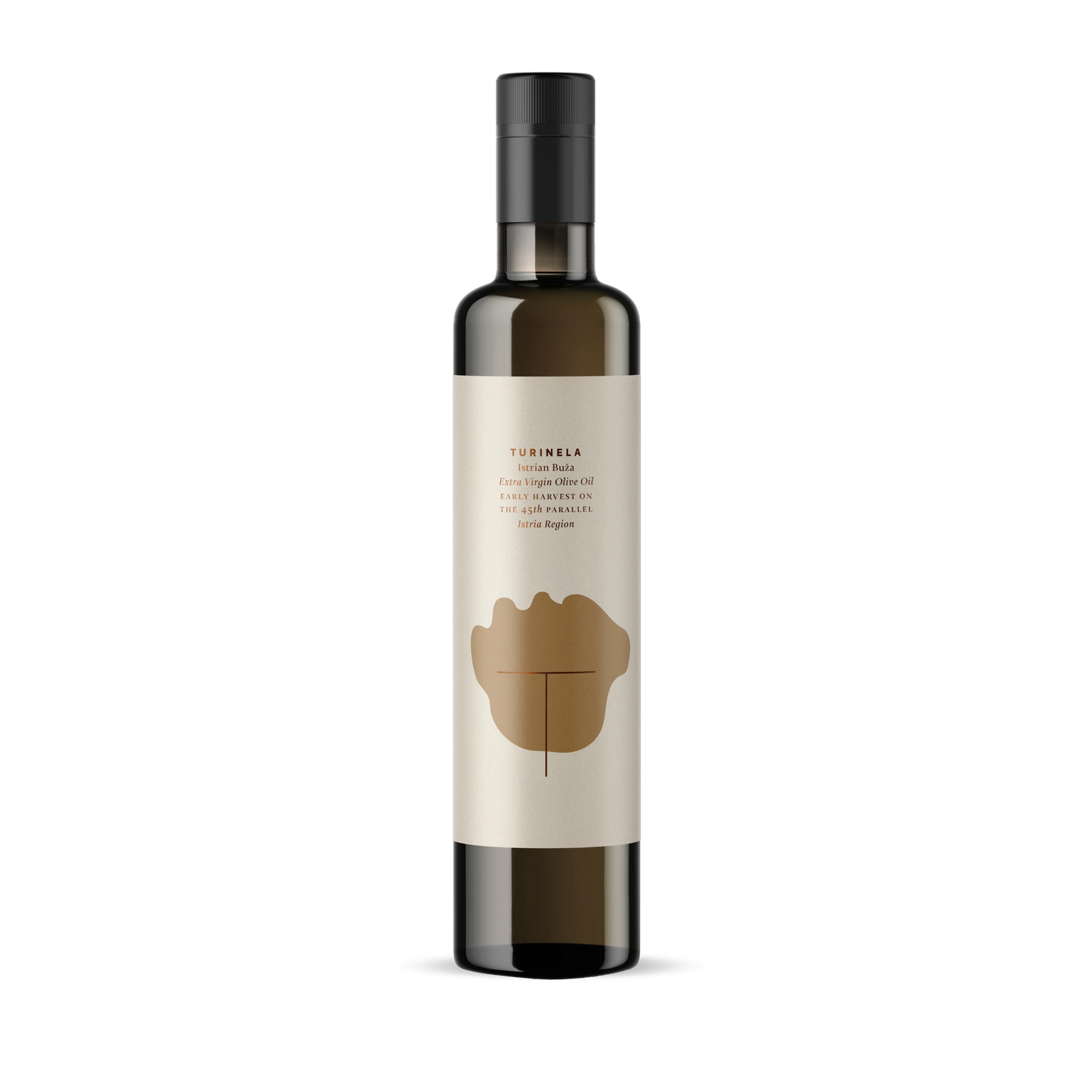
Turinela Buža olive oil – native Istrian variety, 500 ml

Indigenous variety: Buža is native to Istria and is rarely found outside the region.
Bitter with a long, fruity finish: the most distinctive oil in the range
Multiple award-winning olive oil: 6 gold medals at the NYIOOC World Olive Oil Competition
PayPal payment icon Klarna payment icon Visa payment icon Mastercard payment icon Apple Pay payment icon Google Pay payment icon Twint payment icon
Show full details

Varietal knowledge

What is Buža?

Buža is an indigenous olive variety from Istria. “Indigenous” means that it originated in the region rather than being introduced from elsewhere. It is therefore the counterpart to imported varieties such as Leccino and Frantoio, which come from Italy. In practice, the name refers to a group of related local types that developed over centuries in different parts of Istria; the most widespread are Buža, Buža puntoža, and Vodnjanska buža. What they have in common is a high resistance to drought and an oil with pronounced bitterness and a long finish.

In Croatia, Buža is considered the leading variety of Istrian olive cultivation, and a large proportion of Istrian oils that receive international ratings contain it.

Comparison: Our Products and Standard Preparations
Buža olive oil – native Istrian variety, 500 ml
Affordable olive oil from the shelf
Origin:
A family-run business, a single field in Istria
Blend of olive oils from the EU» — several countries, no specific origin, no character
Varieties:
Buža, an indigenous Istrian variety
Not specified
Harvest year:
2025, on the label
Not specified — providing this information is optional
Acidity:
0.10%, tested
Limit value 0.80%; actual value not published
Peroxide value:
2.3, tested
Limit value 20.0; actual value not published
Extraction:
Cold-extracted, below 27°C
Information is usually missing

Information about Buža olive oil – native Istrian variety, 500 ml

About the product

Why an autochthonous variety is something different

A variety that originated in a particular place has adapted over a very long time to its conditions: the soil, the amount of rainfall, the wind, and the frost line. In the case of Buža, this means a barren limestone subsoil with an iron-rich red top layer and a climate that is dry in summer and can become cold in winter. This very harshness is reflected in the oil. Bitterness and pungency are expressions of the defensive compounds produced by the fruit. They are not a side effect, but the defining characteristic of the variety.

Reading bitterness correctly

Many people consider bitter olive oil to be flawed. In the official sensory evaluation of extra virgin olive oil, the opposite is true: fruity, bitter and pungent are the three positive attributes that are evaluated. In freshly pressed oil, bitterness comes from fruit that was harvested before it became overripe. Oil that is not bitter at all was either made from very ripe fruit or is no longer young. What would actually be a flaw are other notes: rancid, fusty, musty, metallic.

Frequently Asked Questions (FAQ)

Was ist Buža Olivenöl?

Ein Öl aus der autochthonen istrischen Olivensorte Buža. Autochthon heisst, dass die Sorte in der Region entstanden ist und nicht eingeführt wurde. Sie gilt in Kroatien als Leitsorte der istrischen Ölkultur und ergibt ein Öl mit ausgeprägter Bitterkeit und langem fruchtigen Abgang.

Wie schreibt man Buža richtig?

Korrekt mit Hatschek auf dem z: Buža, ausgesprochen etwa «Bu-scha». Im deutschen Sprachraum findet man häufig die vereinfachte Schreibweise Buza.

Warum ist bitteres Olivenöl nicht schlecht?

Weil Bitterkeit in der offiziellen sensorischen Bewertung ein positives Attribut ist, neben fruchtig und scharf. Sie zeigt frisches Öl aus nicht überreifen Früchten. Echte Fehler schmecken anders: ranzig, muffig oder stichig.

Wozu passt ein bitteres, kräftiges Olivenöl?

Zu Gerichten mit eigenem Charakter: Hülsenfrüchten, Linsen- und Bohnensuppen, geschmortem oder gegrilltem Fleisch, Wintergemüse, kräftigem Hartkäse. Zu zarten Blattsalaten passt ein milderes, fruchtigeres Öl besser.

Ist Buža sortenrein?

Ja. Dieses Öl stammt aus einem einzigen Buža-Feld des Gutes.

Was bedeutet der Säuregehalt bei Olivenöl?

Er misst den Anteil freier Fettsäuren und zeigt, wie sorgfältig geerntet und wie schnell gepresst wurde. Für natives Olivenöl extra sind bis zu 0,80 % erlaubt. Dieses Öl liegt bei 0,10 %, rund achtmal unter dem Grenzwert.

Was ist die Peroxidzahl?

ie zeigt, wie weit die Oxidation fortgeschritten ist. Erlaubt sind bis 20,0 mEq O₂/kg, dieses Öl liegt bei 2,3. Niedrige Werte deuten auf frische, schonende Verarbeitung hin.

Ist das Öl kalt extrahiert?

Ja. Die Bezeichnung ist gesetzlich definiert und nur zulässig, wenn das Öl bei unter 27 °C durch Zentrifugation oder Perkolation gewonnen wird, ohne Wärmezufuhr, die Aromen verändern würde.

In welchen Grössen ist das Öl erhältlich?

Only in the 500-millilitre bottle.

We take your health seriously

We are all unique, and we each have our own health goals.

We have tried to cover most of the health concerns in our society and have identified the following key areas:

  • More energy & less exhaustion in daily life
  • Become stronger, more resilient, and more capable
  • Bring skin, hair, and nails to a natural glow
  • Balance digestion & gut health
  • Strengthen the immune system naturally
  • Improve hormones, libido & vitality
  • Targeted nourishment for bones, joints, and connective tissue

Based on this, we have created a free 25-30 page PDF guide for each topic just for you. No gimmicks, just real, valuable, and effective tips and tricks.

Now to the guide form
Buža olive oil – native Istrian variety, 500 ml
€29,00